Cyprus 60-Day Tax Residency Rule – A Flexible Route to Cyprus Tax Residency

Cyprus continues to offer one of the most flexible tax residency frameworks in Europe through its well-established 60-Day Tax Residency Rule.

The regime allows eligible individuals to become tax residents of Cyprus by spending as little as 60 days in Cyprus during a calendar year, provided that the relevant statutory conditions are satisfied. This can be particularly attractive for internationally mobile individuals, entrepreneurs, executives and professionals who do not wish to relocate permanently to Cyprus but would nevertheless like to benefit from the Cyprus tax framework.

Following the recent Cyprus Tax Reform, effective from 1 January 2026, the regime has become even more accessible. In particular, the previous requirement that an individual must not be tax resident in any other country during the same tax year has been abolished.

What are the main requirements?

In order to qualify as a Cyprus tax resident under the 60-Day Rule, an individual must satisfy the applicable statutory requirements, including the following:

1. Establish a sufficient professional or business connection with Cyprus

The individual must carry on a business in Cyprus, be employed in Cyprus and/or hold an office in a Cyprus tax-resident company, subject to the conditions prescribed by law.

Depending on the circumstances, an appropriate Cyprus connection may be established through the incorporation of a Cyprus company and the subsequent establishment of a properly structured contractual relationship between the company and the individual, for example through employment or appointment to an office (under a non – executive agreement).

The appropriate structure will always depend on the individual’s particular circumstances, nationality, existing professional activities and immigration status.

Importantly, tax residency and immigration status are separate legal matters. In many cases, depending on nationality and the applicable entry rules, an individual may be entitled to remain in Cyprus for a short period without obtaining a visa or residence permit. This can make the 60-Day Rule particularly practical for internationally mobile individuals. Immigration requirements must, however, always be considered separately on a case-by-case basis.

2. Spend at least 60 days in Cyprus

The individual must be physically present in Cyprus for an aggregate period of at least 60 days during the relevant tax year.

The 60 days do not necessarily need to be consecutive, allowing considerable flexibility to individuals whose professional and personal activities require them to travel frequently.

Fast-Track Procedure
In cases where there is an urgent need to obtain a Cyprus Tax Residency Certificate, an application may, subject to the circumstances of each case and the satisfaction of the Cyprus Tax Department, be submitted and processed before the individual has completed the required 60 days of physical presence in Cyprus. This may allow the process to commence even at a very early stage of the individual’s stay in Cyprus, provided that the necessary Cyprus ties have been established and sufficient evidence is submitted demonstrating the reasons justifying the early issuance of the certificate.

3. Not spend more than 183 days in any other single country

During the same tax year, the individual must not remain in any other single state for a period exceeding 183 days in aggregate.

Following the 2026 Tax Reform, however, the separate requirement that the individual must not be considered a tax resident of another country has been removed, significantly broadening the potential application of the 60-Day Rule.

4. Maintain a permanent residence in Cyprus

The individual must also maintain a permanent residential property in Cyprus, which may either be owned or rented by him or her.

Why consider Cyprus?

For individuals who satisfy the relevant requirements, the 60-Day Rule provides an opportunity to establish Cyprus tax residency without having to spend the majority of the year in the country.

Depending on the individual’s income, domicile status and personal circumstances, Cyprus tax residency may provide access to a number of advantages available under the Cyprus tax system, including the non-domicile regime, applicable exemptions and Cyprus’ extensive network of double tax treaties.

The combination of these benefits with the flexibility of the 60-Day Rule makes Cyprus an increasingly attractive jurisdiction for entrepreneurs, executives, investors and internationally mobile professionals.

How we can assist

Our team can review and assess each case on its individual merits, taking into account the client’s particular circumstances and the applicable legal and regulatory framework.

Based on such assessment, we can advise on the relevant requirements and the appropriate course of action, as well as provide legal assistance throughout the relevant application process.

For further information regarding the Cyprus 60-Day Tax Residency Rule and the services offered by our firm, please contact Mr. Vasilis Antoniou, Advocate & Legal Consultant, at v.antoniou@markoullc.com.

Disclaimer: The above is provided for general information purposes only and does not constitute legal, tax or other professional advice. The application of the Cyprus 60-Day Tax Residency Rule depends on the particular facts and circumstances of each individual case. Any application and the granting of Cyprus tax residency, including any request submitted under an expedited procedure, are subject to the assessment and approval of the Cyprus Tax Department. Specific professional advice should therefore be obtained before taking or refraining from taking any action


Selling Land at Kapedes

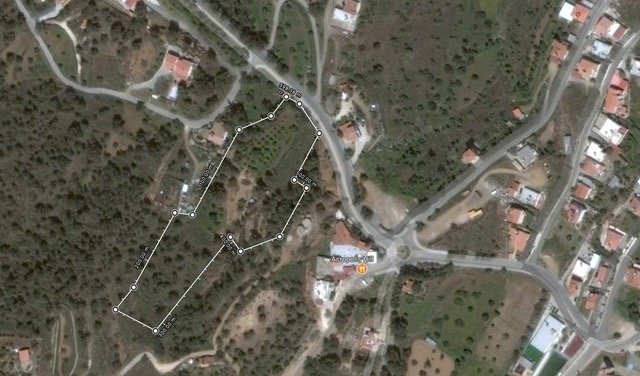
Field in Kapedes, Nicosia for sale

Clients of our firm are interested in selling land with the potential to build in Kapedes, Nicosia with Registration number 0/10212, Sheet/Plan 39/26, Location MAYROGIA, Plot Number 799 and with parcel area 13 decares and 301 sq.m.

The area is predominantly flat and surrounded by pine trees. There is a small orchard of citrus trees, pomegranate, a large olive tree and mature vine which are appealing features for the gardens of any residential home.

The land falls within two planning zones: H2 building density of 90% and H3 building density of 60%. There is an existing electricity supply and bore hole for water. There is direct access to the land from the main road to Machairas, with an attractive stone wall boundary and pavement.

Price: 700.000 euro

Estate agents are welcomed.

For more information, please send us an email at info@markoullc.com


Πωλείται χωράφι στους Καπέδες Λευκωσίας

Πελάτες της εταιρείας μας ενδιαφέρονται να πουλήσουν χωράφι (αγροτεμάχιο) με πεύκα στους Καπέδες, Λευκωσία, με αριθμό εγγραφής 0/10212, Φύλλο/Σχέδιο 39/26, Θέση ΜΑΥΡΟΓΙΑ, Αριθμός τεμαχίου 799 και με εμβαδόν αγροτεμαχίου 13 δεκάρια και 301 τ.μ.

Τιμή: 700.000 ευρώ

Οι κτηματομεσίτες είναι ευπρόσδεκτοι.

Για περισσότερες πληροφορίες, στείλτε μας ένα email στο info@markoullc.com.

When can pseudonymized data be considered anonymized/anonymous, thus falling outside the GDPR?

When pseudonymized data can no longer directly or indirectly identify a physical person and thus fall outside of the scope of the GDPR?

This is the question the General Court of the European Union (EGC) deals with in its ruling of 26 April 2023, case reference: T-557/20. The EGC in its verdict adopts a practical approach which should give relief to modern industry, e-economy and online services.

The EGC held that the answer depends on whether a recipient of pseudonymized data, holds or may reasonable likely acquire information that eventually can identify a natural person.

Background to the decision

The case was brought before the EGC, which can serve as the first instance to the CJEU, by an action of the Single Resolution Board (SRB) based on Article 263 TFEU against the revised decision of the European Data Protection Supervisor (EDPS) following five complaints about the transfer of data collected by the SRB to a third party, which was a consulting company, without informing the complainants, prior to the transfer.

The SRB, namely the central resolution authority within the Banking Union of the EU and under Regulation (EU) No 806/2014 for the framework of a Single Resolution Mechanism, adopted a resolution scheme for a Spanish bank which was bankrupted. In this procedure the SRB called via its website shareholders and creditors that may be affected by the resolution of the bank to register online and provide proof of their ID and their capacity as shareholders or creditors in order to exercise their right to be heard. A relevant privacy notice was also published on its website. At a second stage, the SRB sent an email to those considered to be affected and asked them to complete a form with their opinions. After their names had been replaced with an alphanumeric code consisting of a 33-digit randomly generated identification number, the responses were forwarded to a consultancy firm, which undertook to analyse them. However, the privacy notice on the website had no information about this transfer or other recipients except the SRB itself.

On that ground the EDPS, after receiving five complaints, found that the transfer of these coded responses was in violation of Art. 15 (1) (d) of Regulation (EU) 2018/1725 (analogous to GDPR Art. 13 (1)(e) obligation to inform the recipients).

The SRB argued that there was no obligation to provide information, because the transmitted data to the consulting firm did not constitute personal data, but were anonymous data for the consulting firm, even if the information allowing re-identification is not irrevocably eliminated and resides with the original processor of data (i.e. SRB); this is so because the consultancy firm had had no access to the database with original collected data and thus there was no possibility of data subjects being reidentified by the consulting firm.

The judgment

The EGC adopted the SRB’s arguments and annulled the EDPS’s decision.

The criteria according to the Court that Article 3(1) of Regulation 2018/1725 sets to define ‘personal data’ are two:

–             the information ‘relates’ to a natural person, meaning that by reason of its content, purpose or effect is linked to a particular person (with ref. to Nowak case C‑434/16)

–             the information relates to an ‘identified or identifiable’ natural person (with ref. to Breyer case C‑582/14).

As it was stated by the EDPS during the hearing of the case, the additional information necessary to identify the authors of the comments (respondents in the forms) consisted of the alphanumeric code and the identification database of the SRB.

The EGC held that first, the EDPS in his decision had not examined whether opinions within a form, transmitted to the consultancy company, could relate to a particular natural person by their content, purpose and effect. Second, the EDPS wrongfully considered the transmitted data as pseudonymized data (i.e. information related to an identifiable natural person) because he took for granted, that additional information existed, which could identify natural persons. In that respect, he did not take into account that the necessary additional information for re-identification of respondents was in the hands of the SRB and not in the hands of the consulting firm, which had no access to the SRB’s database, which included names and IDs.

The decisive factor for the Court was if the recipient of the disclosed coded data could in a reasonably possible manner or with means likely reasonably to be used, to identify the data subject and not generally, if additional information that could led to identification existed somewhere.

In other words, the possibility of combining additional information for the identification of a natural person is not sufficient on its own; such possibility must not have been prohibited by law or be practically impossible in the sense that it would have required a disproportionate effort in terms of time, cost and man-power effectively rendering the risk of identification  insignificant (see judgment Breyer, C‑582/14 para. 46).

Further and most notably, that possibility according to the EGC must be examined by reference to the position of the recipient of the data and not just by reference to the position of the exporter of the data.

The EGC concluded that the transmitted data was not information relating to an ‘identifiable natural person’; in his decision the EDPS had not examined from the perspective of the consulting firm if the firm “had legal means available to it which could in practice enable it to access the additional information necessary to re-identify the authors of the comments” (see EGC judgment T-557/20 para. 105), which was not the case as the firm was not allowed by law to have access to the identification database of the SRB.

As the EDPS has lodged an appeal against the judgment of the EGC, it remains to be seen if the bold step of the EGC will be endorsed by the CJEU.

Date: 9 October 2024
Author of the Article: Eleni Zafeiri, Lawyer & Legal Consultant at Markou & Co LLC


References:

Regulation (EU) 2018/1725 (http://data.europa.eu/eli/reg/2018/1725/oj )

Regulation (EU) 2016/679 (GDPR) (http://data.europa.eu/eli/reg/2016/679/oj )

EGC judgment T-557/20 (62020TJ0557 (europa.eu)

CJEU Case Nowak C-434/16 (EUR-Lex – 62016CJ0434 – EN – EUR-Lex (europa.eu))

CJEU Case Breyer C-582/14 (EUR-Lex – 62014CJ0582 – EN – EUR-Lex (europa.eu))

Οδηγός Συμμόρφωσης με τον ΓΚΠΔ/GDPR

Αναρτήθηκε στην ιστοσελίδα του Γραφείου της Επιτρόπου Προστασίας Προσωπικών Δεδομένων  Οδηγός συμμόρφωσης με τον Γενικό Κανονισμό για την Προστασία Δεδομένων [(ΕΕ) 2016/679 (ΓΚΠΔ)(GDPR)]  (δείτε τον Οδηγό εδώ:  Οδηγός Συμμόρφωσης με τον ΓΚΠΔ) ο οποίος για να είναι πιο κατανοητός και απλός στη χρήση του έχει την μορφή ερωτηματολογίου.
Η κίνηση αυτή της Επιτρόπου είναι πολύ καλή για την καθοδήγηση του κοινού, καθώς οι επιχειρήσεις είτε ενεργούν ως Υπεύθυνοι Επεξεργασίας είτε ως Εκτελούντες μπορούν πλέον να χρησιμοποιούν τον συγκεκριμένο Οδηγό ως ένα εργαλείο για την συμμόρφωση τους με τον Κανονισμό και ταυτοχρόνως και ως ένα μέτρο αυτοαξιολόγησης της συμμόρφωσης τους για να προβαίνουν σε διορθώσεις των πρακτικών/ πολιτικών τους και σε επικαιροποιήσεις όπου χρειάζεται, ώστε να διασφαλίζουν την αποτελεσματική προστασία των προσωπικών δεδομένων που διαχειρίζονται στο πλαίσιο των δραστηριοτήτων τους.
Τονίζεται ότι οι ερωτήσεις δεν είναι εξαντλητικές ούτε εφαρμόζονται όλες σε όλες τις περιπτώσεις επεξεργασίας δεδομένων, αλλά πρέπει να λαμβάνεται υπόψη η κατηγορία  των δεδομένων και η εκάστοτε επεξεργασία που γίνεται, κάτι που διευκρινίζεται και στην ανακοίνωση της Επιτρόπου για τον Οδηγό (δείτε την ανακοίνωση εδώ).

Selling a House in Kaimakli

Clients of our firm are interested in selling a house in Kaimakli of Municipality of Lefkosia /Nicosia, in District of Lefkosia/Nicosia, with registration number 1/645, Block 01, Sheet/Plan 21/1000V01, Location inside the village, Parcel Number 827 and with parcel area 681 sq.m

Price: 200,000 euros

Estate agents are welcomed.

For more information, please send us an email at info@markoullc.com

1 2 3 5
error: Content is protected !!