1o ΔΙΕΠΙΣΤΗΜΟΝΙΚΟ ΣΥΝΕΔΡΙΟ ΝΟΜΙΚΗΣ και ΙΑΤΡΙΚΗΣ

Η δικηγόρος του γραφείου μας, Χριστιάνα Μάρκου, Αναπληρώτρια Καθηγήτρια Νομικής στο Ευρωπαϊκό Πανεπιστήμιο Κύπρου και Legal Expert στην Eunomia Ltd, είχε την τιμή να συμμετάσχει στο πρώτο επιστημονικό συναπάντημα γιατρών και δικηγόρων στο Διεπιστημονικό Συνέδριο Ιατρικής και Νομικής που διοργανώθηκε από τον Παγκύπριο Δικηγορικό Σύλλογο και τον Παγκύπριο Ιατρικό Σύλλογο στις 11/6/2026.

Συγκεκριμένα, συμμετείχε στο πάνελ Ψηφιακή Τεχνολογία, Τεχνητή Νοημοσύνη και Εξελίξεις στο Δίκαιο της Υγείας απαντώντας σε πολύ καίριες ερωτήσεις της συντονίστριας, συναδέλφου Λουΐζας Πρωτόπαπα, Προέδρου του Δικηγορικού Συλλόγου Λεμεσού, σχετικά με τις ιδιαιτερότητες των δεδομένων υγείας και την συγκατάθεση του υποκειμένου ως κατάλληλης ή μη νομιμοποιητικής βάσης επεξεργασίας δεδομένων υγείας. Της δόθηκε επίσης η ευκαιρία να εξηγήσει ότι η συγκατάθεση στο πλαίσιο του GDPR γενικά και στο τομέα της υγείας ειδικότερα, είναι «παρεξηγημένη» καθώς και ότι άλλο η συγκατάθεση σε ιατρική πράξη (ή στην συμμετοχή σε μια έρευνα στο τομέα της υγείας) και άλλο η συγκατάθεση στην επεξεργασία των προσωπικών δεδομένων που μια ιατρική πράξη ή έρευνα συνήθως προϋποθέτει.

Εξέφρασε, ακόμα, τη χαρά της που το European University Cyprus ήταν εκεί ως ένας από τους κύριους υποστηρικτές και χορηγούς μιας διοργάνωσης νομικών και ιατρικών επιστημόνων της πράξης δηλώνοντας έτσι την παρουσία του στα χαρακώματα.


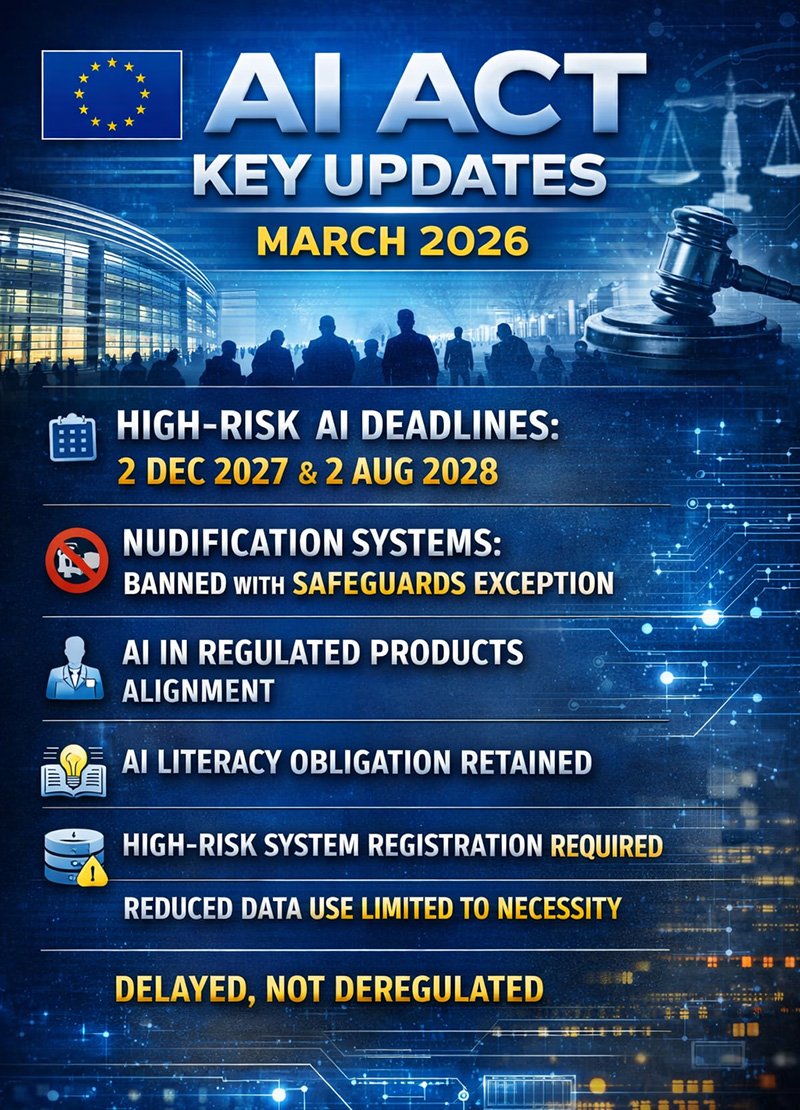
AI Act Updates in a Nutshell

Is your organization ready?

Legislative Development
On 26 March 2026, the European Parliament approved amendments to the AI Act, initiating trilogue negotiations with the Council of the EU and the European Commission.
The objective is to improve the operational application of the AI Act without changing its core structure.
What’s new?
1. More time for high-risk AI
Deadlines are likely moving:
  • Dec 2027 → standalone high-risk AI
  • Aug 2028 → AI embedded in regulated products
Translation: more time to prepare — but not less responsibility.
2. Clear stance on nudifying AI
  • Explicit ban on generating non-consensual explicit content
  • Development of the tech itself is not banned
  • Exception applies if strong safeguards are in place
But fines remain significant (up to €35M or 7% global turnover)
3. Less duplication for regulated products
AI systems already covered under EU product laws (e.g. medical devices, toys, etc.) will follow a more aligned compliance approach.
Goal: simplify — not weaken — regulation.
4. AI literacy stays (with flexibility)
Companies must still ensure their teams understand AI — but with fewer rigid requirements.
In practice: if your people don’t understand AI, compliance becomes impossible.
5. Registration & data rules refined
  • High-risk AI systems must still be registered
  • Administrative burden reduced
  • Sensitive data can be used for bias detection — but only when strictly necessary
What does this mean for businesses?
This update sends a clear message:
  • The EU is not backing down on AI regulation
  • But it is trying to make compliance more realistic
The key point most are missing
The delay is not final yet.
Negotiations between EU institutions are ongoing — and until they conclude:
  • Existing obligations still apply
  • Timelines are not guaranteed
Bottom line
Don’t treat this as a pause.
Treat it as a window to prepare properly.
Organisations that act now will:
  • reduce compliance risk
  • avoid last-minute disruption
  • gain a competitive advantage
error: Content is protected !!